16 mins
Build vs. Buy: Healthcare RCM Software


Get a personalized demo tailored to your organization's needs. See exactly how our AI Agent can transform your revenue cycle.
See your potential collection increase
Personalized demo of AI Agent skills
Integration roadmap for your EHR
ROI analysis for your practice
We will be in touch with you shortly
Armed with cutting-edge AI, payers are denying claims at an increasing rate as provider operating costs (including the costs to attract and retain skilled workers) are way up. Meanwhile, patient responsibility is climbing, and outdated billing workflows leave patients confused and increasingly unlikely to pay. Still, revenue cycle management (RCM) teams are expected to deliver margin improvement and operational efficiency gains.
With slow and inconsistent paths to reimbursement across the entire revenue cycle, and billing teams already overwhelmed by existing workloads, resolution via change management may be out of reach.
For this reason, adding technology is often the most sensible path. Healthcare leaders typically find themselves evaluating two potential routes to improve outdated RCM workflows:
When staying the course is financially unsustainable, but each path to a potential solution carries significant risk, the decision to build, buy, or use EHR-based RCM is an inflection point for the enterprise.
In this guide, we’ll dig deeper into these three options, as well as the factors that should guide the build vs. buy decision for healthcare RCM.
This decision will affect your organization’s financial health in multiple areas of operations:
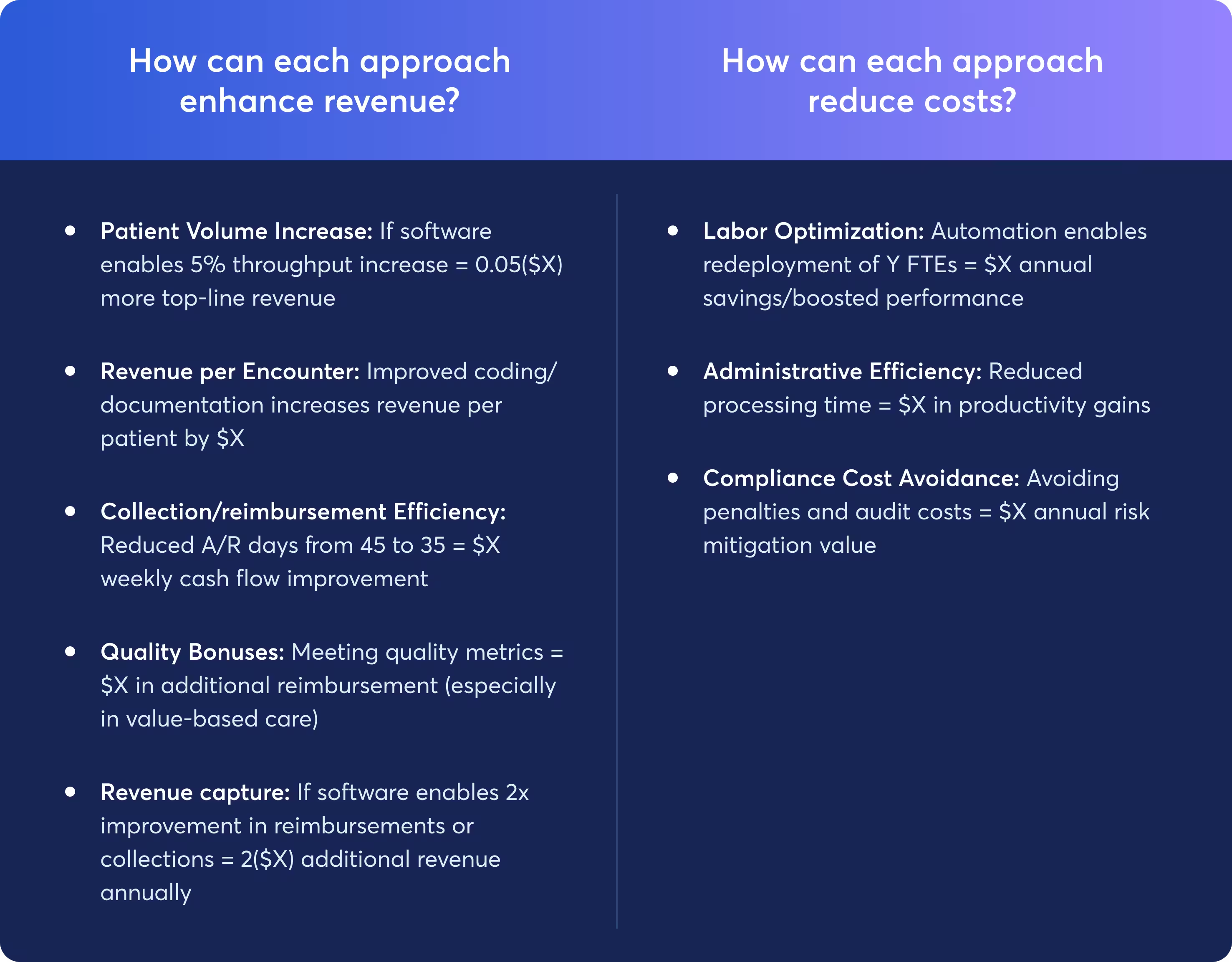
Start with immediate financial impact (0-12 months). How does this affect quarterly cash flow and working capital? Does this fit within approved capital expenditure or operational expense limits? How quickly will ROI show up in financial statements?
From there, consider the strategic financial value (1-3 years). Will this investment improve competitive positioning? What's the quantifiable impact on operational efficiency, e.g. cost per patient or revenue per FTE? Can this investment support scaling up without proportional cost increases?
Lastly, weigh the impacts on long-term financial health (3-5+ years). Will this position you for future regulatory changes and emerging payment models? Does this investment align with trends of increasing patient responsibility and payer behaviors? Are you creating or reducing long-term technical debt? Can the team adapt or change course without significant financial penalty?
One of the most important and overlooked aspects of choosing RCM software is the opportunity cost of the status quo. For most practices, this means sticking with out-of-the-box, EHR-only revenue cycle management. This typically means:
Also consider the opportunity costs associated with one technology solution compared to others. Some systems take longer to implement or require more change management than others. Certain elements can be built or managed in-house, but is it the best use of that team’s time? Certain elements can be purchased, but can your organization prioritize the time required to implement the system, conduct training, and manage the change?
Every decision comes with an opportunity cost. Ensure the long-term solution you choose has enough benefit throughout the revenue cycle to justify the time and money invested.
When making this high-stakes RCM software decision, leaders must consider a variety of factors: regulatory requirements, patient needs, technical capabilities, integrations, and costs.
Today’s RCM software offers AI and automation at nearly every stage of the revenue cycle, from eligibility & prior authorization to denial management, patient billing, & A/R. But new software can bring along integration complexity, vendor management challenges, and upfront costs that require budget approval.
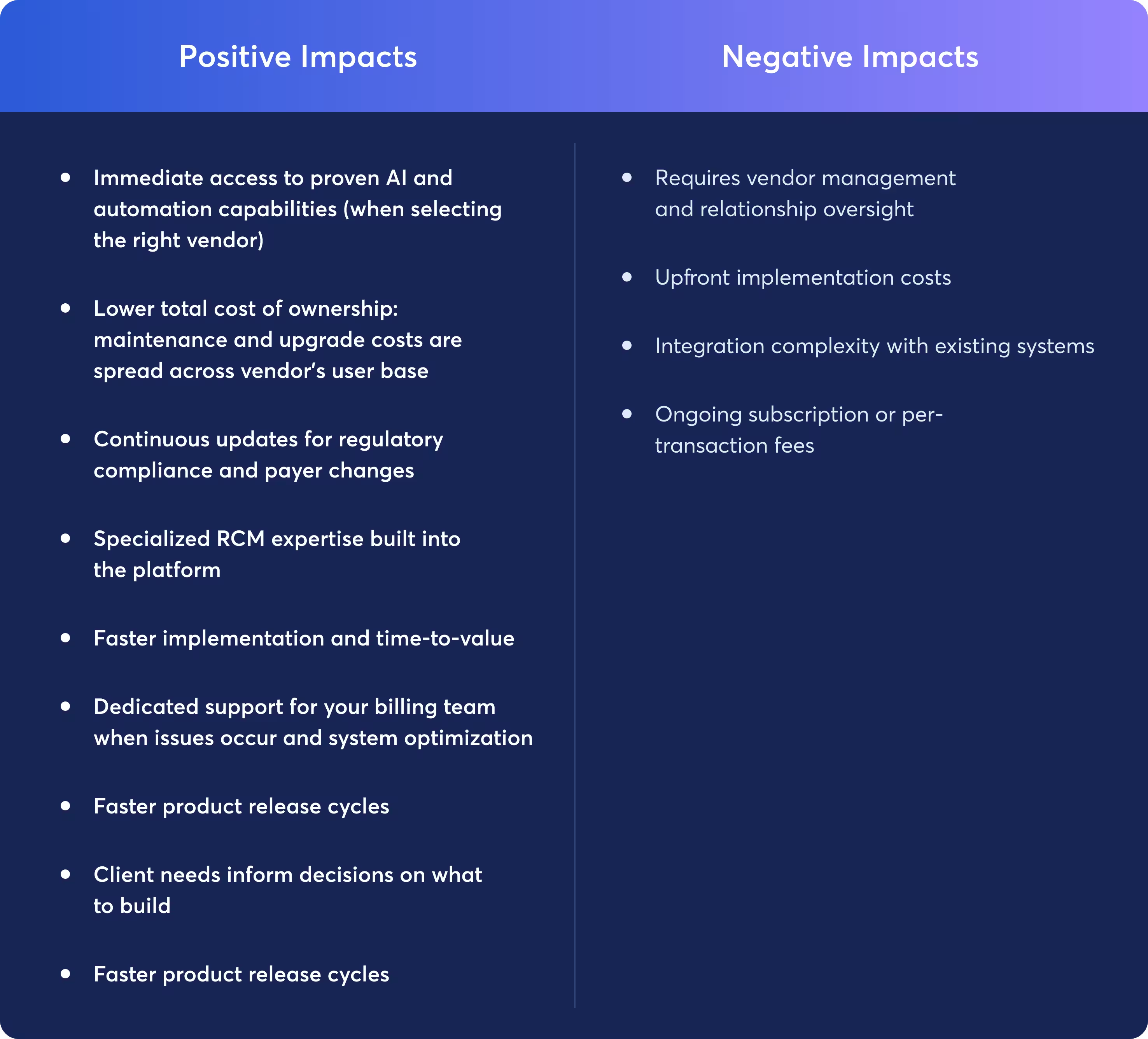
Regardless of size or specialty, healthcare organizations are feeling the strain of chronic staffing shortages and industry-wide financial pressure. Working with a proven RCM software vendor helps providers navigate complex RCM regulations and patient-side workflows, and accelerate cash flow at the same time.
As revenue cycle specialists, RCM software providers build their business (from the product roadmap to the development team to customer support) around the revenue cycle. This focus means a deeper understanding of the revenue cycle challenges billing teams face every day, and an ongoing commitment to solving every exception possible with cutting-edge RCM technologies.
RCM vendors live and die by the depth of their customer relationships, which means a compelling use case from a health system or practice group can genuinely move the needle on their roadmap. Typically smaller in size than EHR vendors, these orgs are more focused, and more commercially motivated to solve your exact revenue cycle problems. When you bring a real operational pain point to a good RCM partner and say "we need this," there's a meaningful chance they'll actually build it. Not in three years, buried in a release note. But on a timeline that matters to your organization. In fact, if you're evaluating RCM solutions, it's worth asking vendors directly: can you show me examples of features you built because a customer asked for it? The ones with good answers are the partners worth talking to.
Advanced RCM systems deliver proactive revenue cycle management, patient-centric billing, and streamlined RCM workflows with AI and automation. RCM software helps providers analyze trends in financial data, claims submissions, and reimbursement processes — and identify issues that hold back patient collections.
When evaluating RCM software options, keep the following elements in mind:
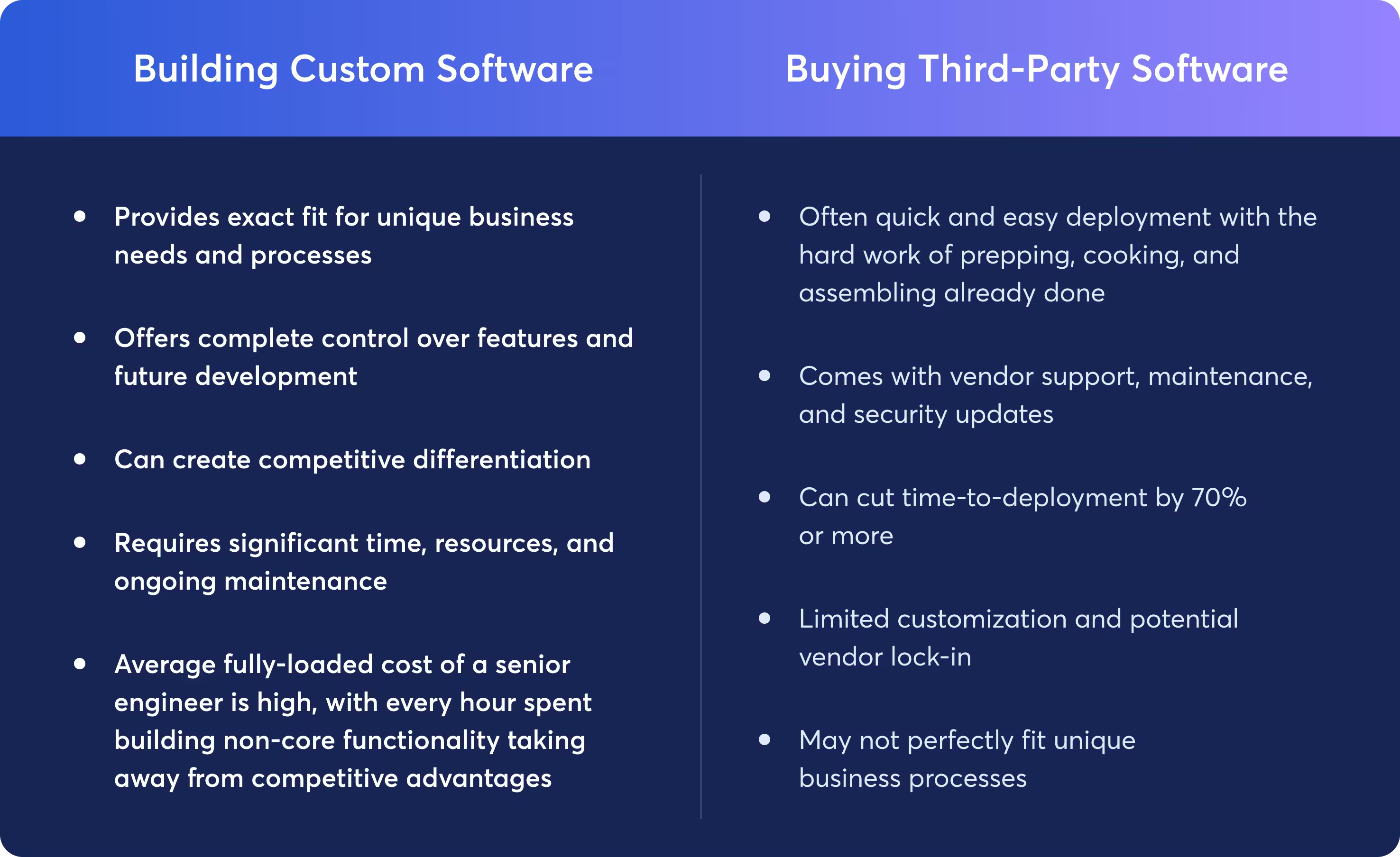
This route offers maximum control and customization, and can yield solutions optimized for in-house RCM teams and patients. However, a custom solution demands significant technical resources (staff and tools) not only to build, but to maintain, secure, and upgrade over time.
Meanwhile, healthcare IT departments are often already stretched thin by cybersecurity priorities, regulatory compliance, and core system maintenance.
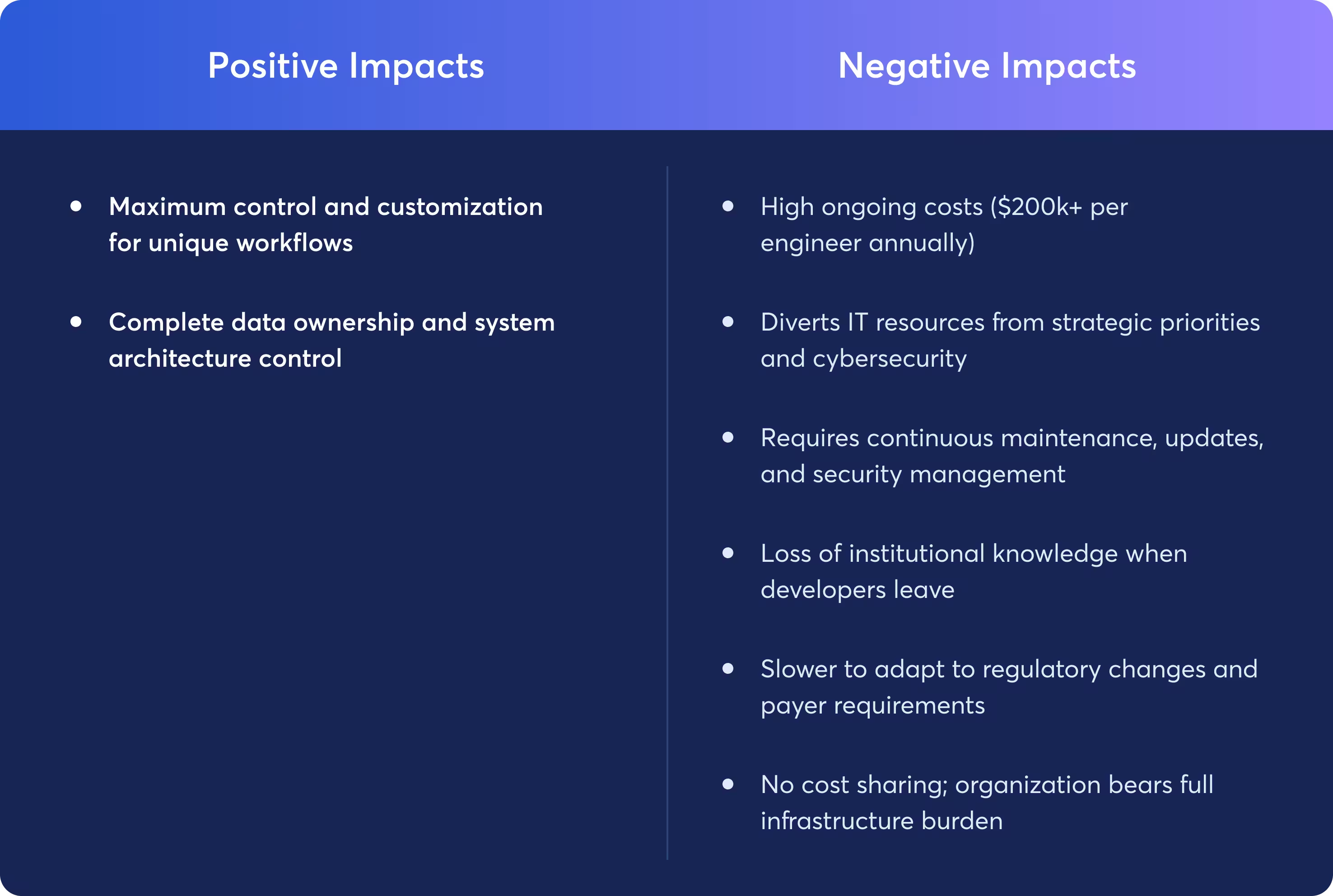
Building in-house software requires a highly skilled development team and a long-term commitment to software maintenance, upgrades, security, compliance, and incident response planning. At a time when specialized software solutions are widely available for most needs, and speed to impact matters, it’s a tough sell for most healthcare providers.
The cost to develop and maintain compliant proprietary tools (especially the cost to acquire and retain technical staff) is incredibly high.
Unless a healthcare provider will gain a unique technology differentiator, software development should generally remain a lower priority than reinvestment in clinical staff, patient services, facilities, and other basics.
In short, building a specialized RCM system in-house presents major financial risk. A complex custom development project traps organizations in perpetual cycles of maintaining, securing, and updating proprietary code instead of improving revenue operations.
Internal teams lack specialized RCM expertise, often overlooking critical payer-specific requirements and compliance nuances that cause costly claim denials. If key developers leave, institutional knowledge disappears and systems are vulnerable or unmaintainable. Recruiting and retaining in-demand engineering talent ($200k+ each annually) is an extremely high cost to balance with clinical staff, patient services, facilities, debt management, and other priorities.
Unlike vendors who amortize costs across many clients, providers alone bear the full burden of infrastructure, security incidents, and regulatory updates. Most critically: engineering resources devoted to RCM can't simultaneously address cybersecurity threats, EHR optimization, or other strategic IT priorities.
Most EHR/EMR systems natively offer at least rudimentary RCM functionality, with some offering additional features as add-ons. At first glance, EHR-only RCM may seem like the best fit: it’s built into your existing system, and if new features must be purchased, they usually seem cost-effective. But EHR-only RCM is not purpose-built. It lacks customization needed to handle exceptions, is missing advanced automation and AI capabilities, and tends to delay cash. In short, it often doesn’t perform as well as software built specifically for the revenue cycle.
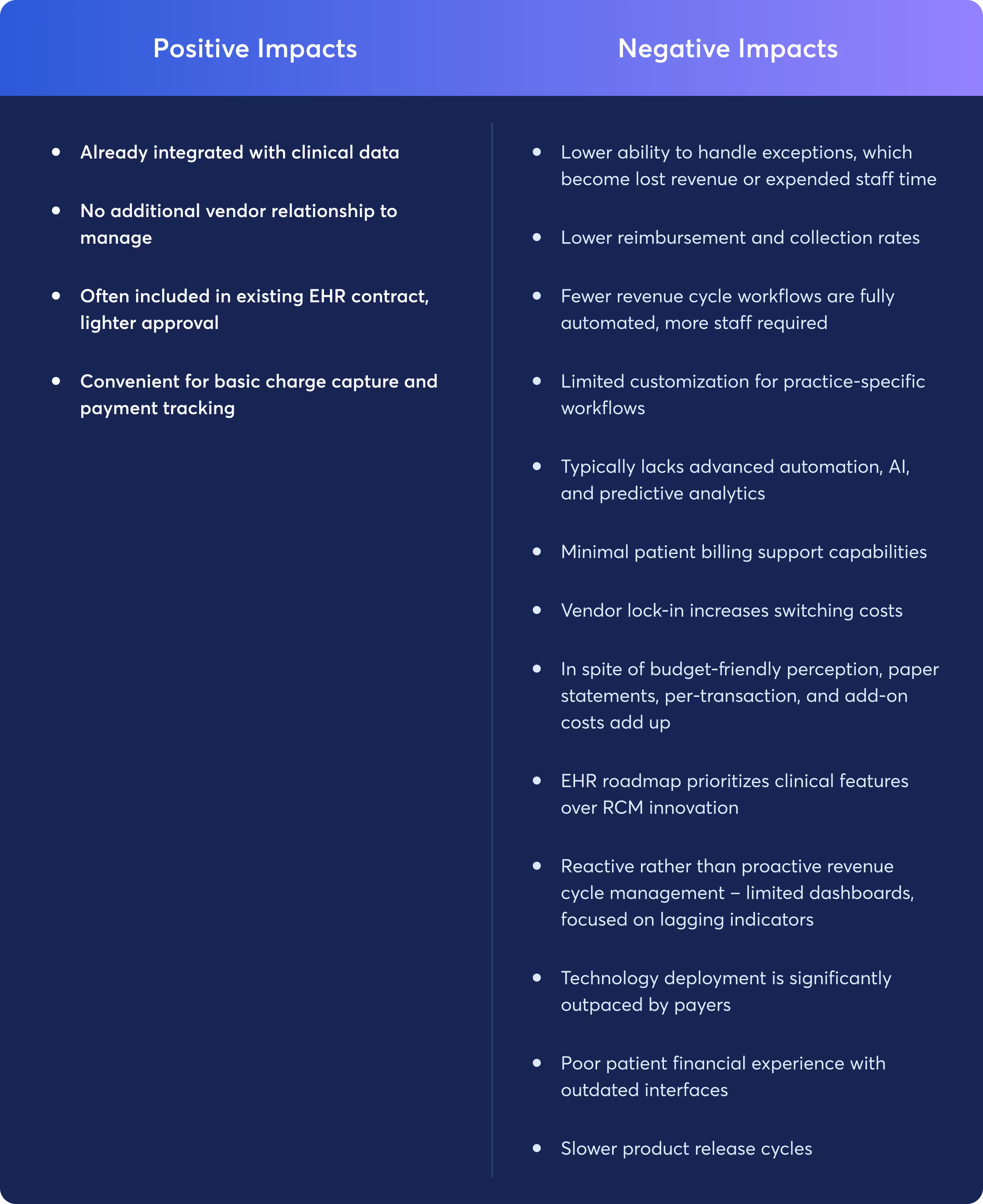
Many healthcare providers start out with the basic RCM functions offered in their EHR/EMR/PM system. These built-in features excel at certain components of RCM, like leveraging clinical data for medical coding and billing to track charges and payments on a per-patient basis.
But effective RCM goes beyond monitoring charges out and payments in; it requires high-quality analytics, easy patient workflows, and workflow automations to accelerate cash flow—areas where EHR-based RCM usually falls short.
The RCM features built into the EHR/EMR system struggle to:
Deciding whether to build or buy software is increasingly critical as software costs rise and time-to-market pressures intensify.
Generally speaking, it makes sense to build when the tool represents core intellectual property/competitive advantage, or when the benefit of retaining strategic control outweighs the high costs of building, upgrading, and maintaining the platform. Building may also be the best solution when a provider has a highly unique technology need not addressed by existing technology offerings.
It generally makes sense to buy trusted third-party software when the feature is commonplace/table stakes in the industry, there are multiple competing vendors, there are high security and compliance requirements, and/or there are complex edge cases emerging. Technologies that require ongoing maintenance — which can cost 15-20% of initial development costs each year — are typically cheaper to buy, as vendors spread out these costs over a large customer base.
Answering the following critical questions builds a business case for your strategic decision.
The right solution depends on a clear definition of the problem: leaders need to know exactly what problems they're addressing before evaluating options. The Growth/Scale/Optimize (GSO) model is a common framework for identifying key business priorities: Growth (G): Attracting more customers or boosting revenue vs. Scale (S): Expanding services sustainably by five to 10 times, and Optimize (O): Enhancing profit margins or improving customer experience.
RCM challenges vary among providers: consider organizational structure, resources, patient populations, payer mix, and geographic context. However, there are recurring themes across theindustry:
Faced with shrinking margins and declining reimbursements, healthcare organizations need to find the fastest path to better margins, but without sacrificing long-term strategy and financial stability.
Depending on the highest-priority issues, different solutions may be available. Some problems can be addressed by streamlining the RCM workflow, or by investing in recruiting, hiring, and professional development for staff. Adopting point solutions can help improve specific operational issues (e.g. a modern payment interface that layers on top of the existing RCM system to reduce friction in patient payments).
However, be wary of “fixing” discrete parts of the RCM process or one specific metric at the expense of a true end-to-end RCM strategy. Dig into related metrics and underlying causes of revenue issues to ensure the solution is a strategic improvement, not a temporary band-aid. In many cases, the capability offered by a point solution could be one element of a larger system that could make a larger positive impact across more RCM KPIs. If you’ll have to transition to a more comprehensive solution in 6-12 months, adopting a limited-scope system may not be worth the time and effort. This calculation is different for every provider.
Payers are outpacing providers when it comes to advanced technology investments. Already, payers with established AI strategies are processing and denying claims faster than provider revenue cycle teams can analyze and respond. Major insurers like UnitedHealth, Humana, and Cigna have implemented algorithmic decision-making in their claims review processes — and more than three-quarters of payer IT leaders report they are actively enhancing tech capabilities for comprehensive AI deployment.
As tech advances at a breakneck pace, a provider with a substandard RCM stack is bringing manual tools to an automated fight. Even healthcare organizations with a skilled and well-equipped engineering team struggle with the actual costs — and opportunity costs — of the change: managing, training, governance frameworks, and quality assurance processes that accompany cutting-edge AI development for RCM.
The decision is not just whether to buy – it’s which solution to buy. The technology’s vendor’s product roadmap must be aligned with your organization’s evolving needs. When that alignment is missing, providers often see tools unable to keep pace with a rapidly shifting revenue cycle landscape.
To analyze the vendor’s development priorities, ask the right questions during the evaluation process:
When vendor roadmap and organizational strategy align, implementations succeed. When they diverge, it leads to suboptimal workflows or expensive migrations.
Modern healthcare organizations are facing significant financial pressures: declining reimbursements, rising operational costs, regulatory compliance expenses, and rising patient responsibility. As margins tighten, RCM becomes a key strategic investment.
What most organizations need is a solution that swiftly improves revenue and reduces operational drag.
Collectly is an AI-powered all-in-one RCM platform that takes 4–8 weeks from kickoff to go-live, thanks to pre-built bidirectional EHR integrations and a dedicated implementation lead.
We help 3,000+ medical facilities save 66% on costs to collect, reduce DSO to 12.6 days, boost patient collections by 2-3x, and streamline RCM workflows with AI agents built for billing and RCM.
We will be in touch with you shortly
.avif)